

POLYCRISIS
Wars in S-Soudan, Oekraine, Gaza, Iran
'Trump' - Climate - Energy - Biodiversity
Tipping points for a breakthrough in Afro-European socio-economic justice, the climate transition and peace in the world


'Drill baby drill' Trump, Secretary of War/self-proclaimed apostle of peace
RD Congo: GRAND INGA, green electricity = 35 nuclear power plants at 1/5 cost, first green lung in the world
Trump is waging war without consulting NATO partners, endangering global energy supplies and accelerating the demise of Europe's energy-intensive industry. The announcement of a new gigantic hydroelectric project in China is a reminder that a similar project has also been on the drawing board in DR Congo for years. A Belgian newspaper dares to wonder if energy-hungry industries are still viable in Europe. If Europe were to realize that its culturally related neighbour Africa is brimming with green energy, this could lead to interesting side effects: important basic materials such as steel, aluminium, cement, glass and petrochemical products that are produced in Africa - thanks to European know-how - are produced almost emission-free, drive the industrialization of the whole of Africa, without affecting biodiversity and create millions of decent jobs every year. A huge new purchasing power for EU products puts an end to illegal migration. A breakthrough in Africa's socio-economic development, facilitated by its culturally related neighbour Europe, could lead to a powerful Afro-European geopolitical entente that would make the protection of Europe by a fickle Trump unnecessary.
-
Europe 2026: energy-intensive industries in crisis, confrontation with fickle Trump
-
Africa: abundant green energy, green lung of the world, a huge new growth market
-
Europe is looking for new partners with South America and India. Why not with Africa?
A breakthrough in Africa's socio-economic development, facilitated by its culturally related neighbor Europe, will realize the climate transition, save biodiversity, curb illegal migration and could lead to a powerful Afro-European geopolitical entente that makes the protection of Europe by a fickle Trump superfluous.
The challenges of energy-intensive industries in Europe
What does the future hold for chemistry in Antwerp?

Does the chemical industry, the "industry of industries", still have a place in Belgium?
In an editorial, "De Standaard" (13-12-2025) questions the future of chemistry in Antwerp and Europe. Europe's chemical industry is threatened by high energy prices, restrictive climate measures, emission taxes, bureaucracy and over-regulation. Despite subsidies, the relaxation of climate regulations or the construction of new nuclear power plants, Europe's energy-intensive industry seems doomed in the long term.Governments are right to be concerned about the state of the sector. They also have a duty to investigate which chemistry is still really necessary - and really viable - here," writes De Standaard.
The Global Battle for Rare Earths: China's Role and the African Challenge
China may be better positioned than the US in the battle for rare earths

A transfer of skills and the local processing and creation of formal jobs
The South China Morning Post (11/12:2025) points out that some leaders of "rare earths" countries now want the exploitation of these resources to be accompanied by their local processing and the creation of formal jobs.
This transfer of skills for the local processing of strategic raw materials responds to electoral interests and promotes local economic growth.
"Green" electricity at a fifth of the cost of "grey" nuclear energy
More and more chemical giants prefer to build new factories in China or the Middle East. The Middle East is blessed with an abundance of oil and solar energy. In early 2025, China laid the foundation stone for a mega-hydroelectric power plant, capable of producing as much electricity as 70 nuclear power plants at one-fifth of the cost per gigawatt.
Africa is blessed with more green energy than the whole of Asia
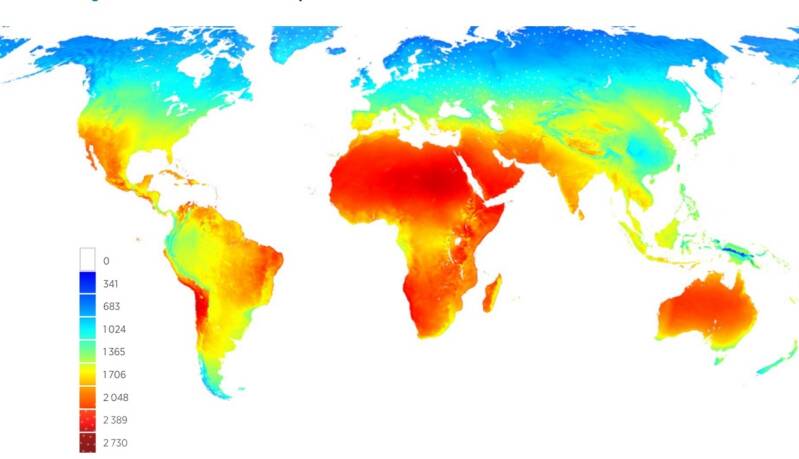
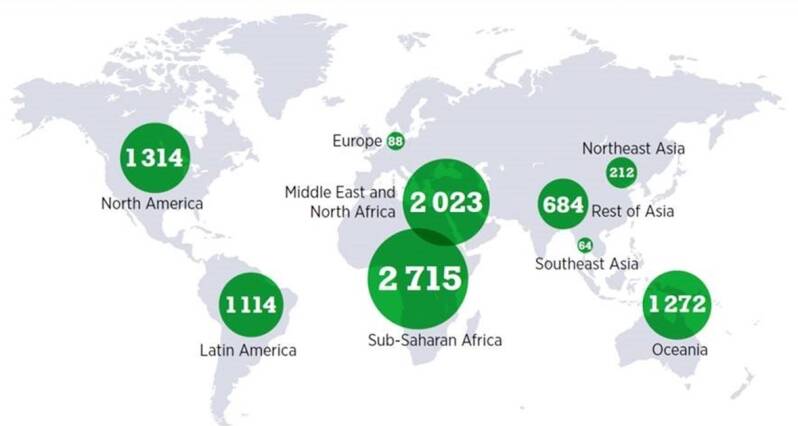
Africa, 60% global solar electricity capacity
Africa, 35% global capacity production GH2 at € 2/kg (Europe 1%)
This truly "green" electricity in Africa and Asia will be generated with standard recyclable technologies, as opposed to "grey" nuclear energy, with uninsurable risks and incalculable decommissioning costs.
Sub-Saharan Africa: engineers, economists, agronomists, computer scientists looking in vain for a decent job
Sub-Saharan Africa continues to be plagued by a fairly significant highly educated middle class with no prospect of a decent perspective. A situation that leads to frustration and even extremism, as evidenced by the example of young agronomists in Niger who, for lack of a future, are tempted to join armed groups in the Sahel.
The aspiration in Africa for a European model of society
Despite anti-Western and anti-neo-colonial resentments, this African middle class continues to dream of a model of society based on formal employment, education, health care, social promotion, social protection, peace and openness to the world for all, on the model of that in Europe. Not that of the US, China or Russia.
Its socially corrected model of society: Europe's trump card?
Senegal: the example of a political transition led by educated Gen Z
In Senegal, in 2024, an educated, articulate Gen Z middle class was at the root of a profound political transition and the marked election, from the first round of voting, of a young, rather inexperienced duo of a president and a prime minister who are open to dialogue.


In August 2025, in Paris, the new president in Paris called for a transfer of manufacturing industry skills and of innovative economic partnerships aimed at training and industrial development, rather than the extraction of mineral resources, for French employers, despite an anti-French climate in Dakar.It was worth noting that Senegal wants to turn difficult pages from the past and drew attention to its significantly educated demographic dividend, unique for companies.
The case of the Democratic Republic of Congo: potential and opportunities

The GRAND INGA RD Congo hydropower project = 35 nuclear reactors at 1/5 cost/GW
A weakly industrialized Congo has to integrate a million young people into the labor market every year. Thanks to its climate-strategic mineral resources, its unique agricultural potential and abundant green energy, the country offers a great opportunity for industrial partnerships. China recently started a major hydropower project in Tibet, at the same time withdrawing the GRAND INGA project in the DRC. This context paves the way for a European proposal: a €100 billion public-private partnership to realise the 44 GW Grand Inga hydropower project, equivalent to the capacity of 35 modern nuclear reactors.
Betting on development: a strategy for the future
In his book "BETTING ON DEVELOPMENT - Why some countries win and others lose", Oxford professor Derkon, a Belgian, concludes that in successful developing countries, elites, with power and prestige, move from protecting their own position to deploying a future based on inclusive growth through the productive industrialization of their countries. Inspired by Derkon, here is a proposal to encourage a hundred established Belgian industrial SMEs to seek partnerships with Congolese companies, supported by an abundance of renewable energy. This dynamic could lead to the industrialisation of Congo, the creation of hundreds of thousands of jobs and the emergence of a new market for Belgian industrial products, while the DRC currently accounts for only a negligible share of Belgian exports.
A winning bet for the Congolese elite
Should the Congolese political elites dare to gamble on the massive creation of decent jobs through the development of industrial partnerships with European SMEs and the implementation of the GRAND INGA project, there is a real chance:
- that they cannot only be democratically re-elected,
- but can also contribute to peace throughout Africa.
A twin-track approach for the DRC
A proposal to test, with the highest priority, the response of the Congolese political elite to a twin-track strategy:
- the creation of 500 industrial collaborations between European and Congolese SMEs;
- on the eventual transfer of European energy-intensive industries to the GRAND ENGA region, with access to a deep-sea port on the Atlantic Ocean, as part of the EU Global Gateway.
Cost of this approach for the European taxpayer: Schwarze Null
Geopolitics
The wars in Ukraine, South Sudan, Gaza and the Middle East: Europe is standing by and watching. Trump, Xi and Putin decide on war and peace. Already today, in 2026, Europe's market power is waning. Due to a structural lack of strategic mineral resources and affordable renewable energy, maximum and interconnected deployment of indigenous wind and solar energy will not be sufficient for Europe to still have significant market power (8%) in a mere twenty years. If, on the other hand, Europe shares advanced industrial know-how and experience with Africa on a massive scale, urgently and with the highest priority, then there is a real chance that an even an informal geopolitical Afro-European partnership between culturally related and economically interdependent neighbours will be able to take the lead in global consultations on issues that matter such as climate, climate and climate change. war and peace.

A new way of thinking
During her speech at the Belgian Diplomatic Days i n September 2025, Ms. Heidi Rombauts, Head of the Belgian Directorate-General for Development Cooperation, emphasized that impactful development cooperation requiressharp analyses by our diplomats, in close consultation with local actors.This must be done at a strategic level that extends beyond traditional school building, educating people, running hospitals, or growing food—things that local communities in the Global South are already doing very well.
Suggestion to diplomats in Sub-Saharan Africa
Interviews with 900 locally trained, empowered engineers, economists, agronomists and computer scientists in seven Sub-Saharan countries show the following:
- The immediate and priority concern of this broadly educated middle class is to find a decent job.
- Despite their qualifications, they lack valuable prospects, mainly due to the glaring lack of an industrial economy that is able to convert local resources into exportable products on a large scale.
- These highly educated people could in turn create numerous jobs for less qualified citizens and generate purchasing power among the middle class. A strong middle class then feeds mini-entrepreneurs, not the other way around.
Root cause of Africa's backwardness
A growing, empowered, and educated African Gen Z realizes that well-intentioned actions such as building schools, supporting entrepreneurs, and running hospitals only address symptoms of deeper causes:
- Africa hardly produces exportable or semi-finished products.
- A persistent, erroneous prejudice that Africa is not ready for modern industrialization prevents foreign industrialists from sharing their experience and technologies. Africa remains mainly a supplier of raw materials, while products are made elsewhere and formal jobs are created.
Consequences for the African middle class
Despite their qualifications, abundant natural resources and renewable energy, a broad African middle class is deprived of a society with widely accessible education, health care and social security, as in Europe.
As a result, young people seek their fortune by sea and desert, postpone starting a family or abandon higher education.
Remedy
Despite poverty and inequality, there is a hopeful Africa, where a broad, educated middle class wants and can move forward.
A change of mentality in Europe towards the "other" Africa can motivate many experienced industrial SMEs to enter into partnerships. The African partner brings market and administrative knowledge, the European partner technology and business processes. A large-scale "métissage" of Afro-European industrial and commercial experience sooner or later creates serendipity: accidental innovations with global value, manufactured on both continents.
Conclusion
A unique opportunity for Europe and Africa
Intensive industrial cooperation with Africa offers Europe an excellent opportunity to strengthen its economy and grow geopolitically. The massive mixing ("metissage") of industrial processes and technologies between the two continents—despite their differences, but culturally related—lays the foundation for a prosperous future. This can lead to greater social justice and geopolitical prestige for both.
Europe, forced by a narcissistic, fickle Trump, aware of the value of the climate transition, of biodiversity, must first and foremost become aware of the "other" Africa, a continent with justified ambitions and adopt a new way of thinking, aimed at an equal partnership with our culturally related neighboring continent.
- Europe has a unique opportunity for a new 'Schumann', as with the ECSC, which brought peace and prosperity for decades.
- A "Mandela-Schumann Afro-European Community for energy-intensive industry" could save the climate transition and bring a hundred years of peace and prosperity.
'Trump' - Climate - Energy - Biodiversity. Tipping points for a breakthrough in Afro-European socio-economic justice, the climate transition and peace in the world
"Linkage" between Africa and Europe paves the way for a prosperous future for both continents, a tipping point for greater social justice between Africa and Europe.
However, a new way of thinking must be adopted that builds a truly egalitarian partnership.
Summary
The document emphasizes that young people seek their fortune elsewhere due to poverty and inequality, but there is a hopeful picture of Africa with a growing, educated middle class. Cooperation between European and African companies, based on mutual respect and knowledge exchange, can lead to innovative breakthroughs and global value. Europe, faced with geopolitical challenges and climate change, is called upon to forge a new, equal partnership with Africa. This intensive cooperation offers both continents a unique opportunity for economic growth, social justice and long-term peace.
More
Europe needs Africa more than the other way around
Africa is not what you think. A guided shift in EU-mindsets
Massive AU-EU blending stimulates chance discoveries (PPT)
EU governments only must promote the “other” Africa. That’s all
Massive industrial EU-investments in Africa save the entire planet
Mandela-Schuman Afro-European Comunity for Energy-Intensive Industries
Does Europe need low energy costs when Africa is brimming with green energy?
Blending Afro-European industrial know-how geopolitically re-establishes the EU
A thousand Afro-European industrial SME partnerships drive Africa's modern industrialisation

4/4/2026 karel.uyttendaele { @ } pandora.be
Maak jouw eigen website met JouwWeb